Let's start with the real conflict
Here's the thing about mismatched toy preferences: it rarely stays about the toys. One partner walks into a store, sees a buzzy vibrator, thinks "this is what everyone uses," and brings it home. The other partner tries it and feels...nothing. Or everything, but the wrong kind of everything. Suddenly you're not talking about sensation anymore. You're arguing about whether one of you is broken, boring, or not trying hard enough.
You're not. And here's the plot twist: lemon clitoral vibrators, which use suction instead of vibration, are one of the smartest bridges I've seen in couples therapy when toy preferences clash. Not because they're a compromise toy, but because they work so differently from traditional vibrators that they expand the conversation instead of narrowing it.
Why traditional vibrators and suction toys feel like opposite ends of the spectrum
Let's be clear about what actually happens when you use each one. A traditional vibrator, whether it's a wand or a bullet, delivers rapid oscillation. That vibration travels through the tissue, spreading the sensation across a larger area. It's continuous, consistent, and the stimulation is fairly wide.
A lemon clitoral vibrator, by contrast, uses pulsing suction. It creates a gentle seal around the clitoris and releases that seal in rhythmic pulses. The sensation is localized, concentrated, and builds differently. Think of vibration as a broad wave. Think of suction as a focal point.
They activate different nerve pathways. They feel completely different. And for people whose bodies respond to one but not the other, this isn't about preference. It's about compatibility between their nervous system and the type of stimulus.
The real reason couples get stuck on this
Most couples don't think about the neurology. They think: "My partner likes X, I like Y, one of us is wrong." Then they default to whoever was more confident about their choice, or they give up toys altogether.
What actually happens physiologically is that your bodies have different sensory thresholds and different tolerances for stimulus type. If your partner's clitoris responds strongly to broad, rapid stimulation, a traditional vibrator feels incredible. If yours responds to concentrated, pulsing sensation, that same vibrator might feel overstimulating or completely numb.
Neither of you is wrong. Your clitorises just speak different languages.
How lemon clitoral vibrators change the dynamic
When a partner who loves traditional vibrators first tries a lemon suction toy, something often shifts. They realize that "vibrator" isn't actually the category. The category is "ways to stimulate the clitoris." Inside that category, there are multiple technologies.
This reframe matters because it turns the conversation from "Your toy vs. my toy" into "What does your body actually need?" And suddenly you're not defending your choice as if it's personal. You're gathering information.
I've worked with many couples where one partner was convinced the other just didn't like toys. Then they tried a lemon clitoral vibrator together, and the person who felt numb with vibrators had an intense orgasm. The revelation wasn't just physical. It was emotional. It meant their partner's body hadn't been broken. It had just been speaking a different language.

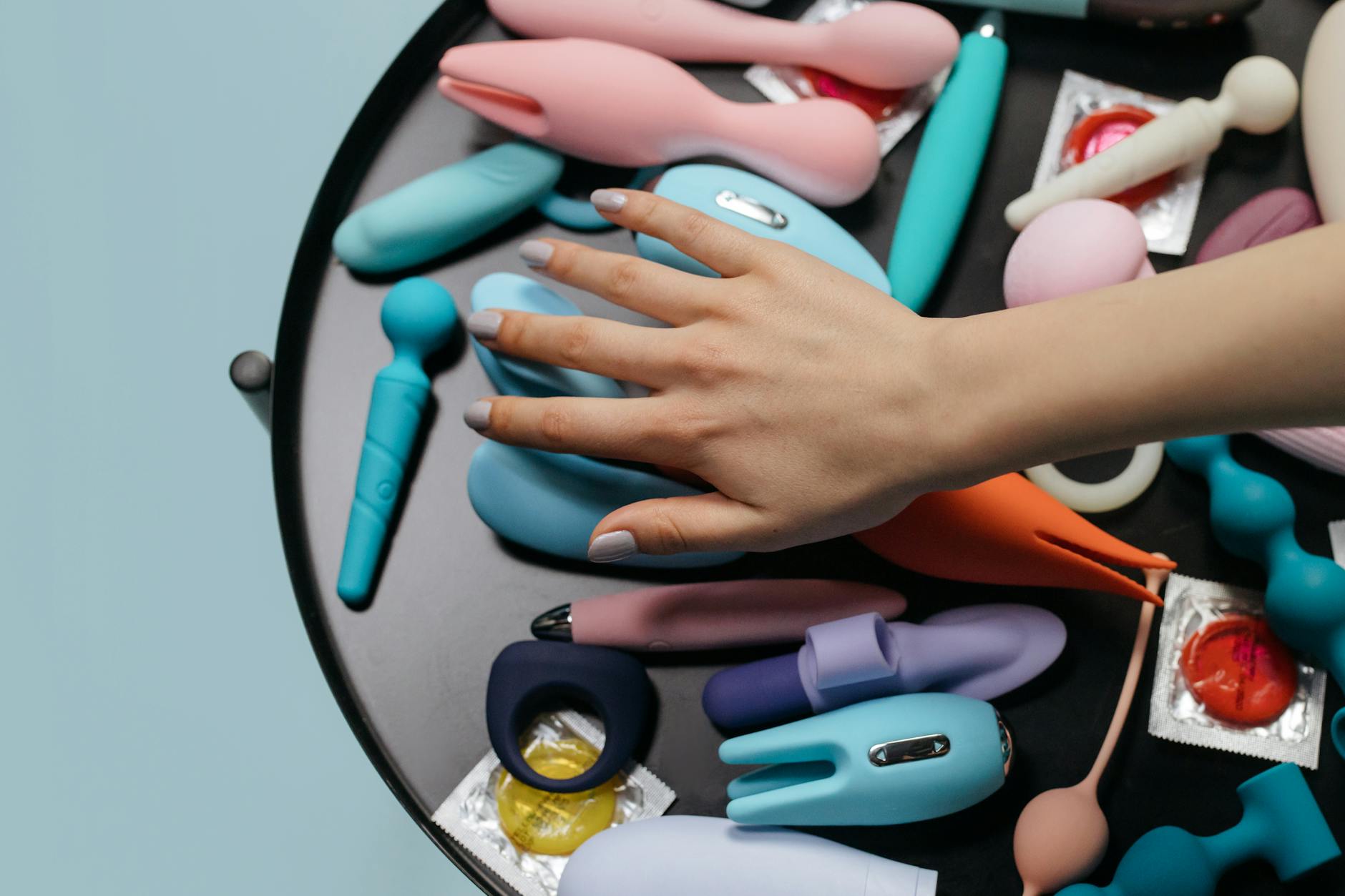
Photo by Anna Shvets on Pexels
Three practical ways this actually plays out
You can use different toys without it feeling like a rejection. If you keep lemon sexual toys and your partner keeps their traditional vibrator, it's not "I don't want to use your toy." It's "We discovered we have different sensory preferences, so we each have something that works." That's a discovery, not a failure.
You can incorporate both into partner sex. Some couples use the lemon clitoral vibrator during foreplay when one person needs localized, intense sensation, then switch to a broader vibrator when they want to build intensity together. Others use them simultaneously. The point is you're not locked into one tool anymore.
You can approach this as a team instead of opponents. When you're shopping for a lemon suction toy together, you're not secretly hoping the other person will "finally get it." You're genuinely curious about what their body responds to. That's a fundamentally different energy.
The communication piece (honestly the hard part)
None of this works if you can't talk about it without shame. And I mean real talk, not "I guess we could try something different" with a sigh.
The fastest way I've seen couples move through this is to separate sensation from emotion. Say something like: "My body responds differently to suction than vibration. Neither of us chose this. Let's figure out what works instead of debating which tool is "better.""
If your partner has been really attached to their traditional vibrator and feels threatened by the idea of a lemon clitoral vibrator, start smaller. Look at a lemon vibrator together. Let them hold it. Explain how suction works versus vibration. Make it educational before it's personal.
Many partners actually become curious once they understand the neurology. It's not a referendum on their toy. It's new information about how your bodies work.
When a lemon suction toy actually makes partnered sex easier
Here's something I've noticed: suction-based toys like a lemon clitoral vibrator often feel less intrusive to partners who are uncomfortable with toys generally. Because they're not vibrating inside the space where penetration might happen, some partners find them less threatening. They feel more like a focused attention device than a replacement device.
If your partner has been the "I'm uncomfortable with toys" person, a lemon vibrator might be the entry point that changes their mind. It's not about convincing them toys are good. It's about showing them that this specific tool works for your body in a way that makes you more available to them.
That's powerful. That's not selfish. That's actually generous.
The money move: trying it together first
Don't buy a lemon clitoral vibrator solo and then spring it on your partner. That recreates the dynamic that caused the original conflict. Instead, have the conversation first. Tell your partner that you've learned about suction-based toys, that they work differently from traditional vibrators, and that you want to explore together.
If your partner is game, try one together. Use it on them. See what happens. Lots of people who think they won't like a toy end up being curious once they experience someone else using it on them. Sensation is different when you're not also managing the physical action.
If your partner isn't game to try it themselves, that's useful information too. But ask why. Is it really about the toy, or is there something deeper about control, anxiety, or intimacy that needs addressing?
The real payoff
When couples actually move through this, the payoff isn't just "we both have orgasms now." It's that you've learned something crucial: your bodies aren't versions of each other that need to be fixed. They're different instruments. And instead of insisting they play the same notes, you learned to play a symphony.
Lemon clitoral vibrators are just the tool that made that conversation possible.
People also ask
Can you use a lemon clitoral vibrator and a traditional vibrator at the same time with a partner?
Absolutely. Some couples alternate between them depending on the type of stimulation they want that day. Others use them simultaneously on different people. You could also use them on different parts of the body. The rhythm and sensation will be completely different, which some couples find really interesting. The key is that you both understand what each toy does before you combine them.
What if my partner thinks a lemon clitoral vibrator is too intense compared to their vibrator?
Intensity and stimulation type are different things. Intensity usually comes down to power level and pattern speed, not the technology itself. Many lemon vibrators have multiple settings, so you can start on a lower pulse rate. But it's also worth considering that your partner might have been used to a very specific sensation, and this is just different, not necessarily worse. Give it a few tries at different settings before deciding.
How do I bring this up without making my partner feel like their toy isn't working for me?
The framing is everything. Instead of "your vibrator doesn't do anything for me," try "I'm realizing my body responds differently to suction than vibration. I'd like to explore that together." You're describing your body, not criticizing their choice. That's a completely different conversation.
Is it normal for one partner to need a lemon suction toy while the other doesn't?
Completely normal. Different people have different clitoral sensitivity, different nerve density, and different nervous system responses. Some people love broad, rapid vibration. Others find it overstimulating. This is biology, not a relationship problem. The problem is when couples treat it like someone's broken instead of just different.
What if we've been using traditional vibrators for years and suddenly want to try a lemon clitoral vibrator?
There's no expiration date on exploring what works. Your body's needs might have changed. Your sensitivity might have shifted. Or you might have just learned that other options exist. All of that is fine. Introduce it as an addition, not a replacement, and see what happens.
Can a lemon clitoral vibrator help if my partner and I have stopped using toys altogether?
Sometimes. If you stopped because one of you felt unseen or invalidated by toys, a lemon vibrator might reframe the conversation because it feels less like a replacement and more like a focused tool. But the real issue might be communication or disconnection that goes deeper than toys. If that's true, that's what needs attention first. A toy won't fix relationship distance.
The bottom line
Your partner's preference for traditional vibration and your preference for suction aren't incompatible. They're just different. The couples I work with who figure this out stop treating their toy preferences like a referendum on their relationship and start treating them like useful data about their bodies.
A lemon clitoral vibrator isn't magic. But it is a really good way to start that conversation. Because it proves that there's more than one way to feel good, and proving that to your partner might be the easiest path toward proving it to yourself.
If you're ready to explore what works for your body, you don't need permission from your partner. You just need curiosity. And maybe a new tool that actually speaks your nervous system's language.
Ready to start the conversation? Let's talk.