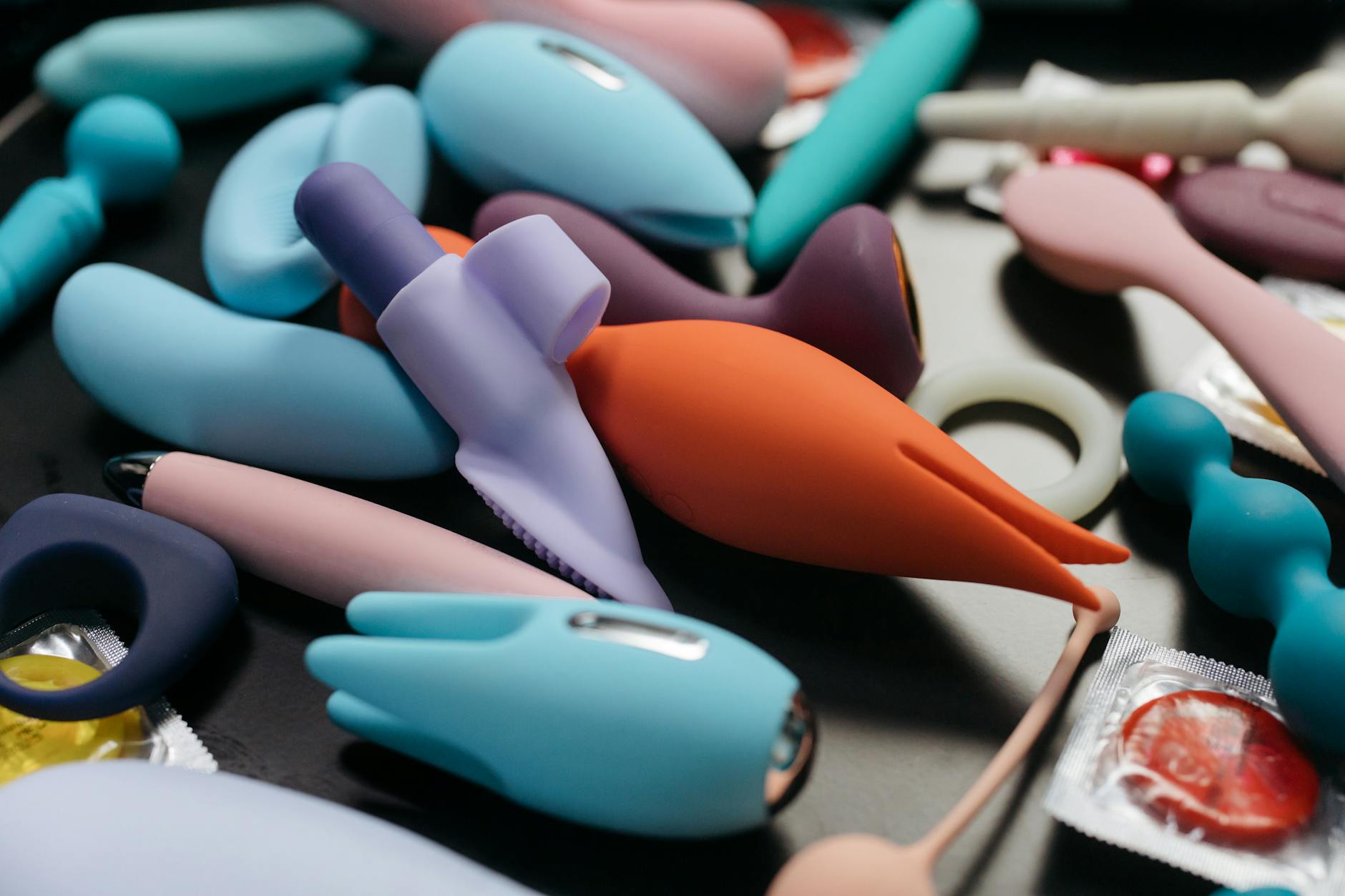
If you've spent years not using toys, it's probably not because you didn't want to. It's more likely that you felt like you shouldn't want to, or that wanting to meant something about you or your relationship. Maybe it felt indulgent. Maybe you were waiting for the "right" person or situation to make it feel less weird. Maybe you tried once, felt self-conscious, and filed the whole category under "not for me."
A few things converge when people finally decide to try a clitoral vibrator after years of skipping it. First, you've probably had enough life experience to know what you actually like. You're not guessing anymore. Second, the information landscape has shifted. Talking about pleasure tools doesn't feel like taboo anymore—it's just pragmatic. Third, you're likely less concerned with performing for an imagined audience and more interested in what actually feels good to you.
That's the real difference between trying toys at 22 and trying them at 35 or 45. The second time around, you know yourself better.
If your history with toys is nonexistent or negative, the shape and sensation matter. A lemon clitoral vibrator like the Lem is fundamentally different from wand vibrators or insertable toys. Here's why:
It's smaller and less intimidating. Wand vibrators have a learning curve and a footprint. They're loud, bulky, and feel industrial. A lemon vibrator is the size of a lipstick cap. It sits in your hand without announcing itself.
The sensation is targeted and gentle. Lemon vibrators use suction or pulsing stimulation focused on the clitoris, not broad vibration across the vulva. If you've been anxious about toys, this specificity can feel less overwhelming. You're not managing a device—you're just holding it in one place.
There's no insertion unless you want it. If your hesitation comes from feeling invaded or controlled, an external clitoral vibrator removes that entirely. This is pure choice.
Let's be real: if you've avoided toys for years, your body probably isn't the issue. Your brain is running the show. You might feel like you "should" be able to orgasm without one, or that needing one means something's wrong. You might feel guilty, or weird, or like you're betraying some internal rule.
None of that is new, and none of it is true. But it's real enough to block you, so let's address it.
Start by acknowledging why you avoided it. Was it shame? Logistics? Bad past experience? Partner discomfort? Straight-up never thought about it? Each reason needs a different approach. Shame fades when you remind yourself that pleasure is not indulgent—it's biological and necessary. Logistics solve themselves when you carve out 20 minutes alone and lock a door. Bad past experiences often improve with better information and different equipment. Partner discomfort is a conversation, not a veto.
The "never thought about it" answer is actually the easiest. You're just trying something new. Same as a new position or a new book.
Order a lemon vibrator. Place it on your nightstand or bathroom shelf. Not hidden. Not shameful. Just there. This is step one of normalizing it in your own mind. You're not being sneaky. You're being intentional.
Day two or three: Solo exploration without pressure.
Set aside 20 minutes when nobody else is home. Take a shower if that helps you feel cleaner and more present (it does for most people). Lie down, turn it on at the lowest setting, and just touch your vulva with your fingertips while the vibrator runs nearby. No goal. No performance. Just sensation.
Many people feel weird the first time. That's normal. Weirdness fades after 60 seconds. If it doesn't, you can stop. Nothing bad happens.
Day four or five: Gentle direct contact.
Same setup. This time, place the vibrator directly on the clitoris. Not inside, not rubbing. Just resting there. Notice what level feels good. The lowest setting is often surprising to people who've avoided toys—it's gentler than expected.
Week two: Actual exploration.
Now you can experiment. Different patterns, different angles, different settings. This is when you start to understand what your body likes. Most people find that lemon clitoral vibrators become part of their routine almost immediately once the first two weeks pass.
Your first orgasm with a vibrator might feel different than what you've had before. It might be more intense. It might be less intense. It might feel localized rather than full-body. It might take longer to build. All of this is normal.
Many people report that the sensation takes three to five uses to feel natural. Your body is learning something new. Your brain is learning to relax into a different stimulus. Give yourself grace during that adjustment.
You might also find that you prefer vibrators to partnered sex, or that you want to alternate, or that you only use them sometimes. None of these are wrong. Pleasure is not a monolith. You get to have preferences.
This conversation is separate from your solo exploration. Use the first week or two to get comfortable with the vibrator on your own. Once you know what you like, then you can decide if you want to involve your partner.
If you do, keep it simple: "I'm trying something new to understand my body better. Want to be part of that?" You don't owe them a performance. You don't owe them excitement or gratitude. You're inviting them into something you've discovered about yourself.
No. Your body doesn't "forget" how to respond without a toy. You might prefer using one, the same way you might prefer coffee with cream over black coffee, but you can absolutely have an orgasm without it. What tends to happen is that people use vibrators when they want intensity or speed, and use fingers when they want intimacy or laziness.
"Will my partner think it's weird?"
Maybe. That doesn't make it wrong. Your pleasure is not contingent on his comfort with your autonomy. If he's going to have feelings about this, that's actually useful information about whether this relationship is making space for your full self.
"Will my body 'get used to it' and need it?"
Something can be your preference without being your only option. Lots of people prefer orgasms with a vibrator but can absolutely have them without. The clitoris is not a novelty-seeking neural pathway. It responds to pleasure. That's all.
"Is it normal that I feel guilt?"
Completely. If you were taught that pleasure is selfish or that your body is not quite yours, guilt is the logical output of that programming. Guilt doesn't mean you're doing something wrong. It means you were trained to feel ashamed of something that's actually healthy.
You've spent years not using a toy. You've spent less time understanding your own orgasm. These two things might not be connected, but they're worth examining. If you've been avoiding toys partly because you weren't sure what you liked, then exploring with a lemon vibrator isn't indulgence. It's research.
You're not treating your body like a problem to solve. You're treating it like a system worth understanding. That's the opposite of shallow or selfish.
Q: How do I know if a lemon vibrator is right for me if I've never used one?
A: If you've been curious about vibrators but hesitant, a lemon clitoral vibrator is the gentlest entry point. It's smaller than wands, more focused than insertables, and you control exactly where and how it touches you. Start at the lowest setting and go from there. Most people know within the first use whether the sensation works for their body.
Q: What if the vibrator feels weird or uncomfortable the first time?
A: Weirdness is normal during the first 60 seconds. Your nervous system is processing a new sensation. That usually passes quickly. If it feels painful or unpleasant after a minute or two, stop and wait a few days. Try again. If discomfort persists, it might not be the right tool for you, and that's fine. Not everything works for every body.
Q: Can I use a lemon vibrator if I've never had an orgasm?
Q: How long should I wait between my first use and trying it with a partner?
A: There's no timeline. You get to decide. Some people use it solo a few times, feel comfortable, and bring it into partnered sex within a week or two. Others want a month of solo exploration first. Your comfort matters more than speed.
Q: Is it normal to orgasm faster with a vibrator than without one?
A: Completely. Vibrators are more efficient. Your body is designed to respond to certain frequencies and intensities of stimulation. A vibrator can deliver those more consistently than fingers or most partnered contact. This doesn't mean there's anything wrong with how you usually orgasm. It just means vibrators are a different tool.
Q: What if I start using a lemon vibrator and my partner feels insecure?
A: That's his feeling to process, not your problem to solve. You're allowed to explore your own body. If he needs reassurance that this isn't about him, you can offer that once. If he needs ongoing validation that a vibrator doesn't replace him, that's a deeper insecurity that he should work on. How to use a lemon vibrator when your partner prefers toys might also be useful context.
Here's the thing nobody tells you when you've spent years avoiding toys: you've already decided you're not "that kind of person." Using a lemon vibrator means admitting that you are, in fact, a person with a body and preferences. That's genuinely threatening to some part of your identity. That's why it feels bigger than it is.
But you do get to change your mind. You do get to decide that you want to understand your pleasure better. You do get to prioritize what feels good over what feels "right." Starting with a lemon clitoral vibrator is just the practical version of saying yes to yourself.
Ready to explore? Contact us if you have specific questions about which vibrator might be the best fit for you, or check out our buying guide for a deeper breakdown of options.