Let's name what happened
Trauma lives in the nervous system. It doesn't just affect your mind. When something violates your body or your sense of safety, your brain learns to treat pleasure signals as potential danger. That's not weakness. That's your body doing exactly what it was designed to do: protect you.
The problem is that protection lingers long after the threat is gone. And when you try to access pleasure again, your nervous system says no. A touch that should feel good triggers tension, dissociation, or a flood of anxiety instead. Some trauma survivors describe it as feeling numb. Others say pleasure feels dangerous, like relaxing might invite harm back in.
If this resonates, you're not alone. And rebuilding pleasure after trauma is absolutely possible. It just requires a different approach. A lemon clitoral vibrator, combined with specific nervous system work, can be part of that path. But not in the way you might think.
Why pleasure becomes triggering
Your nervous system has three states. When you're safe, you're in a ventral vagal state. You can think, feel, connect, and yes, experience pleasure. But trauma shifts you into a sympathetic state (fight or flight) or dorsal vagal state (freeze or shutdown). These states are protective, but they block pleasure completely.
Sex and masturbation require vulnerability. They require you to be still, to feel your body, to surrender to sensation. For survivors, those conditions can mimic the conditions when trauma happened. Even if the current situation is completely safe, your nervous system doesn't know that. It only knows: vulnerability = danger. So it shuts down arousal, floods you with anxiety, or pulls you into dissociation.
This doesn't mean you're broken. It means your nervous system is working. The goal isn't to force pleasure. It's to gradually teach your body that certain kinds of touch, certain environments, and certain moments are actually safe.
Building a foundation first
Before using any toy, including a lemon vibrator, you need to establish what I call a "safe arousal window." This is the small bandwidth of time and circumstance where your nervous system can actually relax.
Three things matter:
Environment control. You need complete privacy and the ability to stop immediately if you feel unsafe. Lock the door. Put your phone on silent. Choose a time when you know you won't be interrupted. This tells your nervous system: you get to decide when this ends.
Grounding before anything else. Spend five minutes before touching yourself on grounding. Feel your feet on the floor. Notice five things you can see, four you can touch, three you can hear. This keeps you in the present moment instead of sliding into flashback or dissociation.
Starting with non-genital touch. Many trauma survivors need to rebuild a sense of safety with their bodies before genital touch feels okay. Spend weeks or even months just touching your arms, your hands, your thighs. Notice what textures feel good. Notice what makes you tense. This is the actual beginning, not a waste of time.
When a lemon clitoral vibrator enters the picture
Here's what makes lemon adult toys different from a standard wand vibrator. The suction sensation is localized, contained, and you have extraordinary control. You're not experiencing broad pressure across the whole vulva. You're experiencing targeted stimulation in one small, familiar zone.
For trauma survivors, this matters because control is safety. With a lemon vibrator, you can:
Start at the lowest setting and stay there forever if you want. There's no pressure to ramp up intensity. Intensity is often associated with loss of control. Staying low tells your nervous system you're in charge.
Remove it instantly without any buildup. Unlike vibration, which continues even after you lift it slightly, suction stops the moment you pull away. This gives you a clear sense of your power to stop.
Use it externally only. You don't have to navigate internal sensations while you're still rebuilding safety. Many trauma survivors find internal touch too vulnerable in early recovery.
Set a timer and move on. Don't try to force an orgasm. Use it for three to five minutes, then stop. Your nervous system learns that pleasure doesn't require you to push past discomfort or exhaustion.
The actual practice
Assuming you've done the grounding work and you're in a safe environment, here's how to use a lemon clitoral vibrator after trauma.
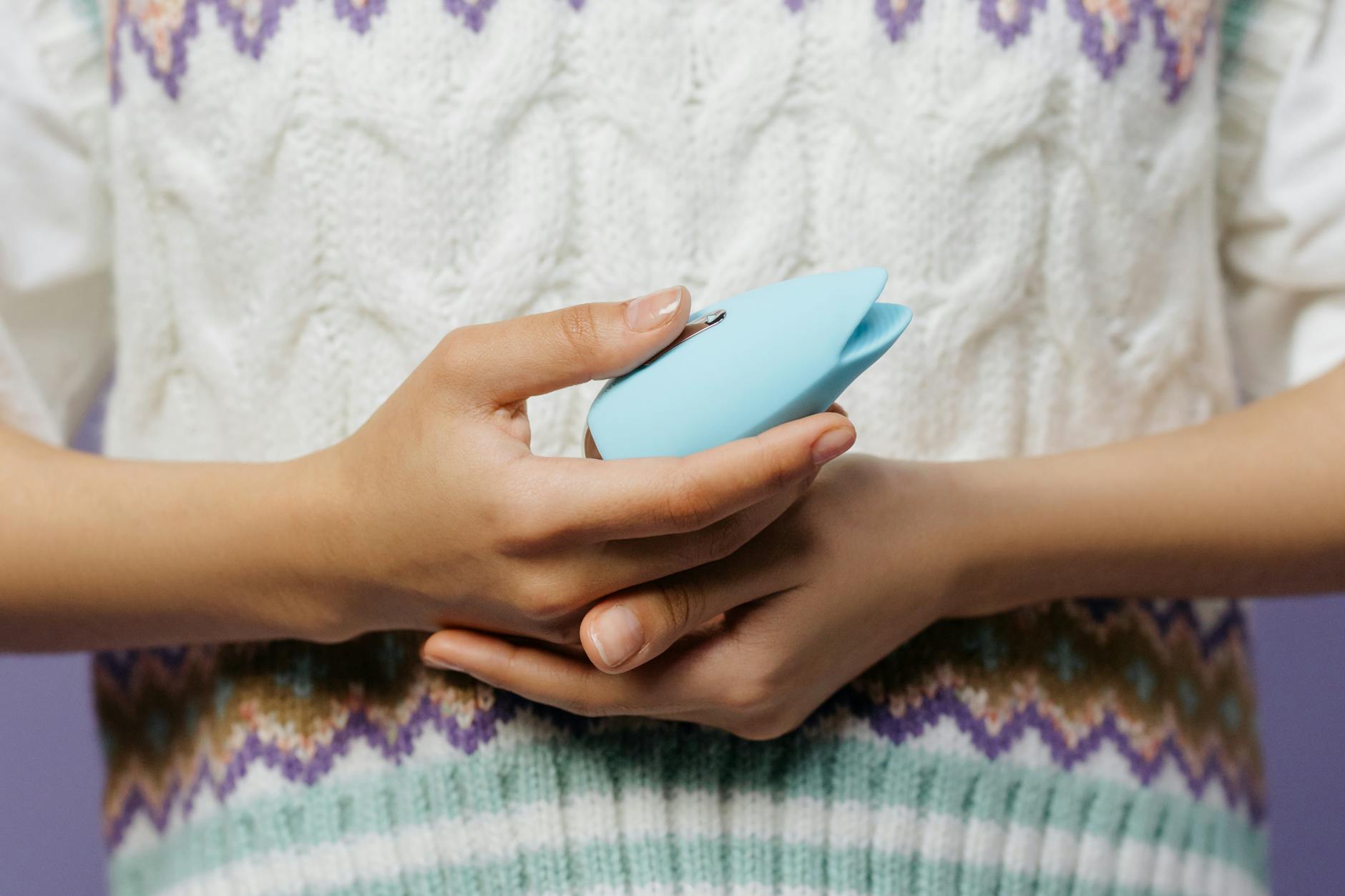
Week one: introduction only. Hold the vibrator. Don't turn it on. Feel the silicone. Notice its weight. Place it gently against your inner thigh or lower belly. The goal is for your nervous system to get used to its presence without any stimulation. Spend five minutes. That's it.
Week two: lowest setting, no contact. Turn on the vibrator at setting one. Hold it an inch or two away from your body. Feel the vibration in the air. You're not touching yourself yet. You're just letting your body get used to the sensation without the vulnerability of direct contact.
Week three: gentle external contact. If weeks one and two went smoothly, use the vibrator on setting one against your outer labia or the pubic mound. Not the clitoris directly. Spend three to five minutes. If anything feels overwhelming, stop immediately. Your nervous system isn't ready yet. That's fine. Go back to week two for another week.
Week four onward: clitoral contact, low setting. Once you can comfortably feel the vibration on your outer genitals without tension or dissociation, try it on the clitoral area at setting one. You might feel pleasure. You might feel nothing. Both are normal. The point is that your body is learning: this touch is safe. I can control it. I can stop it.
Don't push toward orgasm. If one happens, that's a bonus. If it doesn't, that's also fine. The nervous system work is the goal, not the climax.
Expect setbacks
Some days your nervous system will be more activated than others. Stress, hormones, anniversaries of trauma, sleep deprivation. All of these can make pleasure feel unsafe again. On those days, you don't use the lemon vibrator. You go back to grounding. You maybe do some gentle non-genital touch. You remind yourself that this isn't failure. It's your body telling you what it needs.
Trauma recovery isn't linear. You might have weeks where pleasure feels fine, then suddenly it feels scary again. That's normal. The pathway from trauma to pleasure isn't a straight line. It's more like a spiral. You return to the same work, but from a slightly different place each time.
When to bring a partner into this
If you're in a relationship, your partner doesn't need to be present during this work. In fact, many trauma survivors find solo exploration actually feels safer. You're not managing anyone else's needs or desires. You're just meeting yourself.
But your partner should know the basic outline. Not the graphic details. Just: you're doing nervous system work to rebuild your relationship with pleasure. You're using specific tools and pacing. You might need them to respect closed doors and not ask how it went.
Only when you feel genuinely safe and pleasure-positive in solo play should partnered touch re-enter the picture. And even then, the same pacing applies. Go slow. Communicate. Stop whenever you need to.
The role of professional support
A lemon clitoral vibrator is a tool. It's not therapy. If you're working through sexual trauma, please also work with a trauma-informed therapist. Ideally someone trained in somatic experiencing, EMDR, or internal family systems. These approaches help your nervous system actually process trauma, not just work around it.
Your therapist and your solo practice work together. The therapy helps your nervous system resolve the protective mechanism. The toy and the practice help you rebuild positive associations with pleasure and your body. Neither one alone is enough.
FAQ
Can I use a lemon vibrator if I'm still in flashbacks during masturbation?
No. Not yet. Flashbacks mean your nervous system isn't in a safe enough state to include pleasure. Work with your therapist on grounding and flashback management first. Once flashbacks become rare and manageable, then introduce the vibrator slowly.
How long does it take to rebuild pleasure after trauma?
There's no timeline. Some people regain comfort with pleasure in months. Others need a year or more. Pushing yourself on someone else's timeline just re-traumatizes. Your body will tell you when it's ready. Listen to it.
Is dissociation during masturbation a reason to stop?
Yes, pause immediately. Dissociation after trauma is your nervous system's way of leaving the situation because it still feels unsafe. Pushing through dissociation reinforces the old protective mechanism. Stop, ground yourself, and try again another day.
Can partnered sex happen while I'm rebuilding solo pleasure?
It can, but it's usually harder. You're asking your nervous system to be vulnerable with another person before it feels safe being vulnerable alone. If you're in a relationship, talk openly about this. Partner support and understanding actually speed recovery more than any toy.
What if I orgasm but it doesn't feel good?
That's common after trauma. Your body might be physically responsive but emotionally shut down. That's not an orgasm you should celebrate. It's a sign you're still in a protective state. Slow down. Don't chase orgasm. Focus instead on moments when pleasure actually feels present and positive, even if they're small.
Do I need a specific lemon vibrator model, or will any lem vibrator work?
The fundamentals of low-intensity, contained stimulation work with any quality lemon suction vibrator. What matters more is the environment, the pacing, and your nervous system readiness. A fancy toy in an unsafe situation won't help. A basic lemon clitoral vibrator in the right conditions will.
Moving forward
Rebuildling pleasure after trauma isn't about forcing yourself to feel good. It's about slowly, carefully teaching your nervous system that your body is safe. That pleasure doesn't require you to abandon your boundaries. That you can feel good without losing control.
A lemon vibrator is a tool that gives you control and agency. But the real work is the nervous system retraining. Be patient with yourself. You've survived something hard. Your body is smart. It's just scared. With the right support and pace, that fear can soften. And on the other side of that softening, pleasure is waiting.