When stress kills desire, the problem isn't you
You've heard this before: stress tanks libido. But what that sentence actually means changes everything about how you handle it. Stress doesn't erase your capacity for pleasure. It doesn't rewire your brain or damage your body. What it does is lock your nervous system into survival mode, which makes arousal feel impossible because, neurologically speaking, your body has decided that pleasure is a luxury you can't afford right now.
I work with couples navigating job loss, health crises, parental burnout, and grief almost daily. The pattern is always the same. One or both partners suddenly can't access desire. They panic. They assume something is wrong with the relationship, or with them sexually. They white-knuckle their way through sex, which makes it worse. What they're actually experiencing is a completely normal nervous system response to abnormal stress.
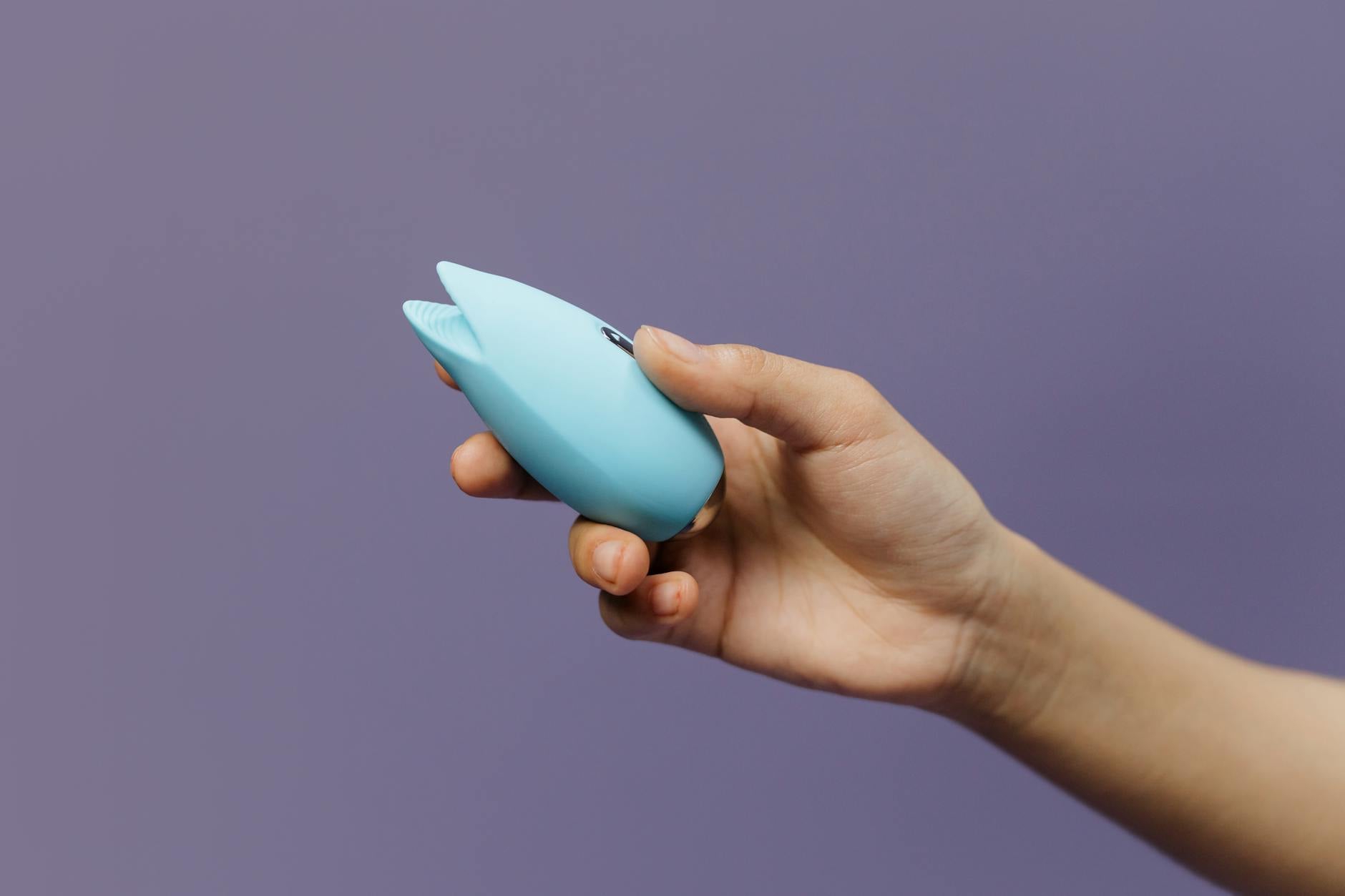
The good news: you can rebuild this. And tools like lemon clitoral vibrators are weirdly effective at it because they work with your nervous system instead of against it.
How stress actually changes arousal
When you're in survival mode, your body is operating from the sympathetic nervous system. Blood is routed to your core muscles and away from your skin. Your pelvic floor tightens. Sensation dulls. Focusing on pleasure feels selfish or impossible. Your brain is running threat-detection software, not desire software.
Arousal requires the parasympathetic nervous system. That's the rest-and-digest mode where blood flows back to the surface, muscles relax, and pleasure signals actually register in your brain. Stress doesn't make that system disappear. It just means it's offline, sometimes for months.
The mistake most people make is trying to force arousal through willpower or by ignoring the stress. That creates a second layer of tension. Your body has to work even harder to feel anything, which makes the whole experience more frustrating.
What actually works is meeting yourself where you are nervous-system-wise, then gently inviting pleasure back in through a route that doesn't require you to suddenly shift into high arousal.
Why lemon vibrators help when your nervous system is offline
Clitoral vibrators, especially lemon suction tools, are uniquely helpful during low-libido periods because they can activate pleasure pathways without requiring the mental bandwidth or emotional readiness that partnered sex demands.
Here's the mechanics. The clitoris has roughly 8,000 nerve endings and a reflex pathway that runs directly to your spinal cord and brain. When you use a lemon clitoral vibrator, you're stimulating that reflex pathway with a consistent, non-demanding signal. Your brain doesn't have to manufacture desire. It just has to respond to input.
That matters when you're stressed. You're not trying to feel something you don't feel. You're giving your nervous system permission to respond to direct physical input. Sometimes that leads to orgasm. Sometimes it just leads to a few minutes of relief and blood flow returning to the surface of your body. Both are valuable.
The suction mechanism, specifically, is gentler on tissue than traditional vibration alone. If you're clenched from stress, aggressive vibration can actually increase tension. Suction creates a slow, rhythmic pull that works with your body's natural reflex rather than overriding it.
Starting over when you feel nothing
If stress has left you feeling numb to pleasure, the worst thing you can do is jump back into sex the way you used to have it. Your nervous system needs permission to come back online slowly.
Start with solo time, no pressure to orgasm. Set a timer for 10 minutes. Use a lemon vibrator on low settings in a comfortable, private space. The goal is sensation, not climax. You're literally retraining your nervous system to register pleasure input again.
On your first few sessions, you might feel almost nothing. That's normal. Your body is still in protective mode. Keep going anyway. By session three or four, you'll likely notice tingling or warmth that wasn't there before. That's your parasympathetic nervous system coming back online.
Don't jump to higher intensities. Low to medium settings are more helpful when you're rebuilding. They give your nervous system time to adjust without shocking the system back into sympathetic overdrive.
The arousal-buildup problem and how to solve it
One of the hardest parts of low-libido recovery is the gap between how you used to feel and how you feel now. Your brain remembers that arousal used to happen quickly. Now it takes 20 minutes or doesn't show up at all. That discrepancy creates shame, which creates more tension, which makes the problem worse.
Let me be direct: that timeline is normal right now. Stress extends arousal buildup. Accept it. Budget for it.
Use your lemon vibrator as part of a longer ritual. Light a candle. Put your phone in another room. Use the device for 15 to 25 minutes without checking the clock. Let your brain understand that this is protected time for sensation, not a performance target.
Many people find that arousal builds better when there's no goal attached. If you're using the vibrator and thinking, "This better work or I'm failing," your sympathetic nervous system lights up again. If you're thinking, "I'm spending 20 minutes noticing what my body can feel right now," arousal is more likely to show up as a side effect.
Bringing pleasure back into partnership
Eventually, most people want to reconnect sexually with a partner. But timing matters. Don't rush this step until you've rebuilt solo pleasure first. That typically takes 3 to 4 weeks of consistent solo practice, depending on how severe the stress was.
When you do reconnect, tell your partner what's actually happening. "Stress locked my nervous system down. My arousal timeline is slower right now. I want to explore this together, but I need patience and no pressure to perform." Most partners understand this immediately when it's framed clearly.
You can incorporate your lemon clitoral vibrator into partnered sex. Some people find that using the device together takes pressure off the partner to manually stimulate exactly the right way, which paradoxically makes the experience more connected because the focus shifts from performance to shared sensation.
If your partner has never been comfortable with toys, this conversation usually goes differently when stress is the context. You're not asking permission for a lifestyle change. You're saying, "I need this tool to rebuild something we both want."
The difference between low libido and depression
Low libido from acute stress usually starts improving within 4 to 8 weeks once the stressor begins to resolve. If months have passed and you feel flat across the board, not just sexually, you might be dealing with depression or burnout that needs more support.
That's not a failure. It's useful information. Talk to your GP or a therapist. There's no shame in getting professional support to help your nervous system reset. Tools like lemon vibrators are genuinely helpful, but they work best alongside other recovery practices, not instead of them.
Rebuilding sensuality beyond the vibrator
Here's what I see work consistently: pleasure recovery isn't just about the toy. It's about rebuilding the conditions where pleasure can exist.
That means sleep. Rest. Time in your body that isn't productive. A shower where you're not rushing. A conversation with your partner where you're actually present instead of running through a to-do list. A meal you actually taste. These micro-moments of sensuality prime your nervous system to receive pleasure when you use your lemon vibrator.
Stress steals sensuality. You rebuild it by intentionally choosing small moments of it back. The vibrator is a tool for that rebuilding, not the whole solution.
FAQ: Rebuilding pleasure after stress-induced low libido
How long does it usually take to feel desire again after major stress?
Typically 4 to 8 weeks once the stress begins to lift, assuming you're actively rebuilding sensation through solo play and reconnecting with your body. Some people see shifts within 2 weeks. Others need 12 weeks or longer if the stress was severe or ongoing. The timeline also depends on whether the stressor has actually resolved. If you're still in crisis mode, desire often stays offline.
Can a lemon vibrator work if I feel completely numb?
Yes, it often works better than partnered sex in that situation because it removes the pressure and emotional complexity. The clitoral vibrator can stimulate a reflex response even when you don't consciously feel much. Over time, as you practice, conscious sensation returns. Start on low settings and be patient with the process.
Should I use a lemon vibrator alone or with a partner during recovery?
Start alone. Your nervous system needs to remember what pleasure feels like without the added labor of managing someone else's presence or expectations. Once you've rebuilt solo sensation and arousal timing feels more predictable, introducing a partner can actually be easier and more connected. The vibrator gives you a reliable foundation.
Does using a vibrator during stress recovery mean I'm relying on it?
No. You're using it as a tool to retrain your nervous system. Think of it like physical therapy after an injury. You wouldn't say someone relying on crutches after surgery is becoming dependent. You'd say they're using a helpful tool during recovery. Once your arousal capacity is rebuilt, you can use the vibrator as much or as little as you want.
What if arousal starts returning, but orgasms feel weaker than before?
This is incredibly common during stress recovery. Your capacity is coming back before intensity does. Give it more time. Continue solo practice with your lemon clitoral vibrator. Orgasm strength typically bounces back within a few weeks of consistent sensation rebuilding. If it doesn't after 8 to 10 weeks, talk to a doctor or sex therapist.
Can I use a lemon vibrator if my partner and I aren't having sex during this period?
Absolutely. In fact, that's often the healthiest approach. You're rebuilding your relationship with your own pleasure first, not forcing partnered sex on a timeline. When you're ready to reconnect sexually, you'll have a clearer sense of what actually feels good to you right now.
The path forward
Stress-induced low libido is one of the most reversible sexual challenges there is. Your nervous system isn't broken. It's just protecting you the only way it knows how. Lemon vibrators work so well here because they give your body permission to respond to pleasure without requiring you to generate desire from nothing.
Start small. Solo practice with low intensity. Let sensation rebuild before you expect arousal or orgasm. Be patient with the timeline. And when you're ready to reconnect with a partner, bring that same patience and honesty into that conversation.
Your desire isn't gone. It's just temporarily offline. And there are tools and strategies that work with your body to bring it back. If you're ready to start rebuilding, reach out or explore what works best for your situation.