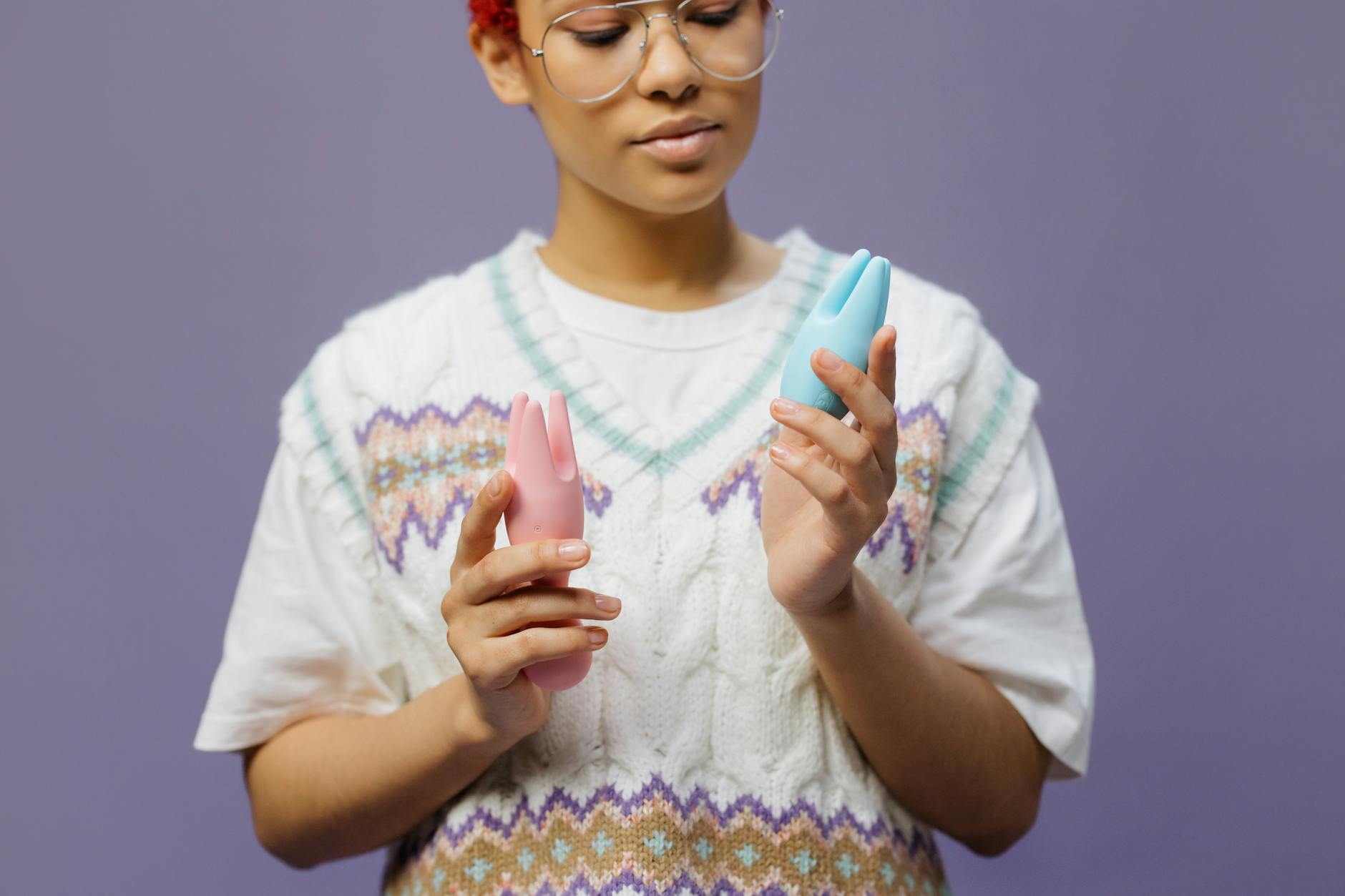
How to Use Lemon Vibrators When You Feel Pressure to Orgasm on Demand
Performance anxiety kills pleasure faster than anything else. Here's how to use a clitoral vibrator to take back control and orgasm on your own timeline.
Here's the thing nobody tells you: the worst orgasm is the one you're performing. Not the quiet one, not the slow one. The one where your brain is running a live commentary on how long it's taking, whether your partner is getting bored, if something is wrong with you because it hasn't happened yet.
Performance anxiety around orgasms is wildly common, and it's almost always relationship-adjacent. Either your partner has explicitly or implicitly signaled that your pleasure is on a timeline, or you've internalized the belief that a good orgasm should happen quickly and easily, every single time. Neither of those things is true, and both are absolutely wrecking your actual capacity to come.
Your nervous system doesn't know the difference between "my partner is waiting for me to finish" and "a tiger is chasing me." Both are perceived as threat. When threat shows up, your parasympathetic nervous system goes offline. Your brain stops prioritizing pleasure signals and starts prioritizing survival. Blood flow redirects. You tense up. Everything gets harder.
There's actual neuroscience here. During arousal, the prefrontal cortex (the part of your brain that thinks, judges, worries) is supposed to quiet down. With performance pressure, it stays loud. You're running threat detection while trying to feel good, which is neurologically impossible.
The cruel part: the more you focus on "I need to come right now," the further away orgasm gets. It's like trying to fall asleep by deciding you're going to be asleep in three minutes. The demand itself is the problem.
This is where a tool like a lemon clitoral vibrator actually rewires the whole dynamic. Not because the Lem is magic, but because it shifts the locus of control back to you.
When you're using a vibrator solo, there's no audience. There's no timer. There's no partner reading your body like a text they're trying to decode. You're not performing. You're just feeling.
A lemon vibrator designed specifically for clitoral stimulation (like the Lem, which uses gentle air-suction rather than traditional vibration) does something else important: it gives you a predictable sensation you can actually trust. The suction pattern is consistent. You're not wondering if you're doing it right because the device is doing it the same way every time. That removes a whole layer of self-doubt.
When you start with solo exploration, you also learn what your actual arousal curve looks like without external pressure. Maybe you need twenty minutes. Maybe you need different patterns at different points. Maybe sometimes you come in four minutes and sometimes you don't come at all, and both are fine. None of that is information you can access when someone is waiting for results.
Build confidence solo first. Use your vibrator alone until coming feels boring, not miraculous. This sounds counterintuitive, but the goal is to make pleasure feel normal and consistent enough that you stop treating orgasm like a high-stakes event. When you've had ten unremarkable orgasms in your own space, the next one with a partner stops feeling so fraught. You know you can do this.
Set explicit boundaries with your partner before partnered exploration. This is the conversation most couples skip, which is why they crash. Tell them: "I want to try using this with you here, but I need you to know I'm not on a timeline. If it takes thirty minutes, that's fine. If it doesn't happen, that's also fine. Your job is to stay in your own body, not to monitor mine." If your partner can't agree to that, you haven't fixed the underlying problem. You've just added an audience to it.
Use the vibrator during partnered activity if you want to, but own it completely. Some people love having their partner present while they use a lemon clitoral vibrator. The suction pattern is totally compatible with hand play or penetration. But the key: you're controlling the tool, you're setting the pace, you're choosing the moment. Your partner is not "trying to make this happen." They're along for the ride.
A vibrator can remove the mechanics of performance pressure, but it can't touch the beliefs underneath.
If you genuinely believe that a "normal" orgasm should happen in five minutes, or that taking longer means something is wrong, or that you owe your partner an orgasm, that belief will follow you even with the best tool. The vibrator just becomes another way to fail at an impossible standard.
This is where the real work is: separating your pleasure from your partner's experience. Your orgasm is not a gift you owe them. It's not a measure of how attracted you are to them. It's not proof that they're good at sex. It's just a physiological response that either happens or doesn't, and neither outcome reflects anything about your worth or your relationship.
Once you actually believe that, the pressure lifts. And once the pressure lifts, pleasure becomes accessible again.
Sometimes partners do resist when you want to explore pleasure on your own first. The resistance usually feels like concern: "Don't you want me to help?" or "I want to be part of this." And sometimes that's genuine, and sometimes it's control dressed up as care.
Either way, the answer is the same: you get to explore your body alone. Not as a rejection of your partner, but as a basic right. If your partner can't accept that without resentment, that's actually information you need. How to Use Lemon Vibrators With a Partner When Communication Feels Awkward walks through what that conversation actually sounds like.
Once you've reclaimed your pleasure from performance pressure, something shifts in your relationship itself. You stop performing in other ways too. You become less anxious about your body, your orgasms, your desirability. That confidence is sexy in a way that desperate-to-please energy never is.
Your partner actually benefits from you using a clitoral vibrator solo. They get to be with someone who knows what they want, who isn't in constant anxiety mode, who can actually relax into intimacy because there's no invisible scoreboard running.
The Lem isn't fixing a broken person. It's a tool that helps you access what was always there. Your capacity for pleasure. Your right to it on your own terms.
How long does it usually take to orgasm with a lemon clitoral vibrator?
There's no standard timeline. Some people take three minutes, some take forty. The whole point of using a tool solo is to find out what your timeline is without external pressure warping it. Many people find that the first few solo sessions with a clitoral vibrator take longer because you're nervous or learning the device. Once you're comfortable, things settle into whatever your actual rhythm is.
Can I use a lemon vibrator if I've never had an orgasm with a partner?
Absolutely. In fact, learning what your body does alone is often the first step toward pleasure with someone else. Clitoral vibrators can be particularly helpful here because they provide consistent, predictable stimulation that isn't dependent on someone else's effort or timing. That removes a lot of pressure.
What if my partner thinks using a vibrator means I don't want them?
This is one of the most common relationship myths, and it's worth naming directly: a vibrator is not competition. It's a tool, like a shower head or a pillow. Using one doesn't diminish what your partner provides. But if your partner genuinely feels threatened, that's a conversation deeper than the vibrator. You might benefit from couples counseling to unpack what's really driving that fear.
Is it normal to feel selfish for prioritizing your own orgasm?
Very normal, and very worth examining. You've probably internalized the idea that "good" sex is about your partner's satisfaction or about meeting someone else's expectations. In reality, your pleasure matters as much as anyone else's. Prioritizing your orgasm isn't selfish. It's essential.
Should I hide using a vibrator from my partner?
Not ideally, no. Secrecy tends to create shame, and shame is the opposite of pleasure. If you feel you need to hide it, that's a sign the dynamic in your relationship needs attention. That might mean a conversation with your partner, or it might mean talking to a therapist about where that shame is coming from.
Can a lemon clitoral vibrator help if I've been avoiding sex because of performance anxiety?
Yes, often. The vibrator helps remove the audience element and the pressure element, which are usually the biggest barriers to reconnecting with pleasure. But it's also worth checking in with yourself about what else might be going on. How to Use a Lemon Vibrator When Desire Returns After a Long Absence explores that in more depth.
Your pleasure doesn't need to be earned. It doesn't need to be fast. It doesn't need to happen on anyone else's timeline or look any particular way. You don't owe your partner an orgasm, and your partner doesn't get to decide what your pleasure should feel like.
A clitoral vibrator can help you remember that, but the permission has to come from you first. Use your tool. Explore your body. Find out what actually feels good when nobody is watching. That's where real pleasure lives.
If you're ready to reclaim this part of your life and need support working through relationship patterns around intimacy, reach out at /contact to chat about next steps.