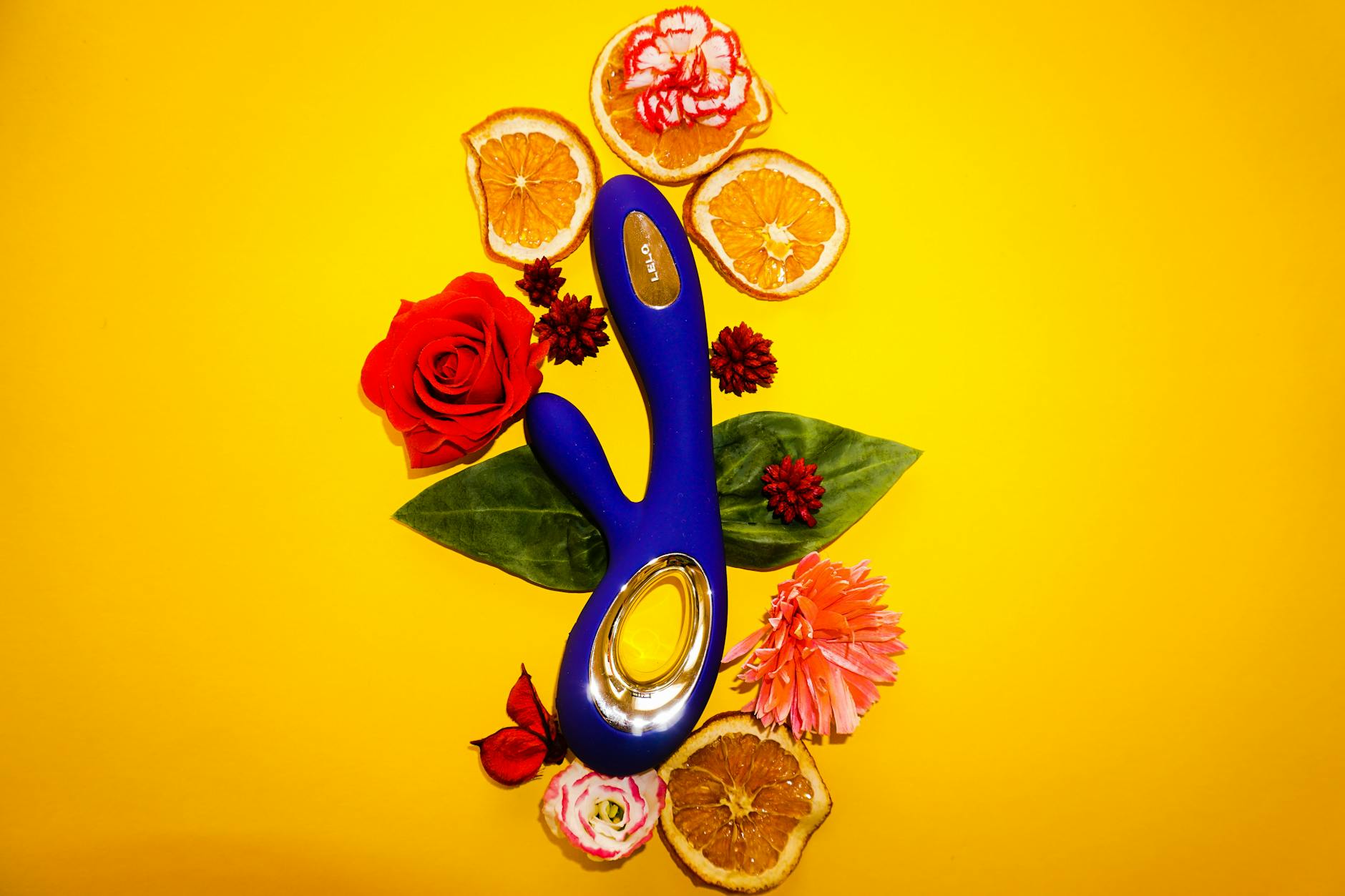
Why Clitoral Vibrators Feel Different During Different Cycle Phases
Your pleasure isn't static. Hormones shift how sensation builds, how quickly you arousal, and what intensity feels best. Here's how to work with your cycle instead of fighting it.
If you've ever noticed that orgasms feel harder to reach some weeks and effortless other weeks, you're not imagining it. Your cycle doesn't just change your mood or energy. It rewires how your nervous system responds to stimulation, how quickly blood flows to the clitoris, and how intensely you can orgasm. This matters when you're using lemon vibrators or any clitoral vibrator, because the settings and approach that work beautifully week one might feel overwhelming week three.
Days 1 through roughly day 13 of your cycle, estrogen is climbing. Blood flow to the genitals increases. The clitoris swells slightly, becoming more sensitive and more responsive. Your nervous system is literally primed for faster arousal.
This is when a lemon vibrator or clitoral vibrator in general often feels best, because the tissue is naturally more engorged. You might find you reach arousal in 5-10 minutes instead of 15-20. Orgasms tend to build faster and feel more intense. Some people report multiple orgasms feel easier during this phase.
What to adjust: You might want to start on lower intensity settings and work up more quickly than you would mid-cycle. If you usually use pattern 3 or 4, you might find pattern 2 gets you there faster. The Lem vibrator or similar lemon adult toys respond well to this phase because suction-based stimulation matches the increased blood flow without needing as much intensity to feel satisfying.
Right around day 14, estrogen peaks and then drops sharply. This is ovulation week, and it's wild.
For maybe 24-48 hours, you're at peak clitoral sensitivity. Some people experience spontaneous arousal just from thinking about sex. Orgasms can feel shallower but more frequent, or deeper and more full-bodied. It varies. Your desire is at its annual high.
Then estrogen drops like a stone, and progesterone climbs. That cliff matters. By day 16 or 17, you might notice that the same intensity that felt perfect two days ago now feels too much.
What to adjust: If you're tracking your cycle, this is the week to experiment. Try your usual settings first, but have a plan to dial down if sensitivity spikes. Some people find that ovulation week is when they explore new patterns or intensities they wouldn't try other times. Give yourself permission to be more sensitive to sensation here. One person told me she could only enjoy clitoral vibrators on the lowest setting during ovulation week, but loved pattern 5 the week before.
Days 15-21 or so, progesterone starts rising. You have more energy, more focus. Your metabolism shifts. This is when people often say "I feel like myself again" after ovulation's hormonal chaos.
Clitoral sensitivity is normal here, but blood flow is slightly lower than it was during the follicular phase. This means arousal takes a bit longer to build. You might need 20-25 minutes to reach the same level of engorgement you felt in week two.
But here's the thing: orgasms during this phase often feel deeper and more full-bodied. The nervous system is more grounded. Some people prefer sex and pleasure during this phase to the ovulation peak because it feels less like a sprint and more like an actual experience.
What to adjust: You might need to extend warm-up time. That means longer foreplay, more external touch before introducing the vibrator, or using a water-based lubricant even if you don't usually need one. The Lem vibrator or other lemon clitoral vibrators work well here because you can start lower and build gradually without it feeling thin or unsatisfying.
Days 22 onward until your period arrives, progesterone is high and estrogen bottoms out. This is the luteal phase's second half, and it's when most people struggle with pleasure.
Clitoral tissue is less engorged. Arousal is slower. You might feel numb or disconnected from sensation. This isn't broken. This is your hormones at their furthest point from estrogen dominance.
But here's what I tell clients: intensity becomes your asset. While lower intensity might feel thin and unsatisfying, higher intensity patterns often feel grounding and satisfying in a completely different way. The decreased blood flow means you need more direct stimulation to achieve orgasm, but when you do, it can feel incredibly cathartic.
What to adjust: This is the week to go to patterns 4, 5, or 6 on your lemon vibrator without guilt. You're not broken. You're responding appropriately to lower estrogen. Water-based lubricant helps here too. Some people find that combining a vibrator with manual touch or a partner's touch helps because the variety keeps the stimulation interesting when sensation is naturally lower.
Three mechanisms are at work. First, estrogen directly affects blood flow to genital tissue. Higher estrogen = more engorgement = more sensitive nerves. Second, estrogen affects how your nervous system processes pleasure signals. High estrogen means faster transmission, which feels like faster arousal and more intense sensation. Third, progesterone acts as a bit of a dampener. It's not a bad thing. It grounds you. It just means you need more input to feel the same output.
Additionally, your baseline stress response shifts across your cycle. During the luteal phase, your nervous system is more easily activated by stress and therefore more easily activated by pleasure too. You might find that distractions bother you more, but when you do settle in, intensity feels better.
If you want to move beyond guessing, track three things for two months: the date, which pattern or intensity you used on your lemon sexual toys, and how it felt on a simple scale (too intense, just right, not enough, couldn't finish).
You'll likely see a clear pattern. Most people find that patterns 2-3 feel best during the follicular phase, ovulation week is experimental, early luteal needs a bit longer warm-up, and late luteal wants intensity. But your pattern might be completely different. Your cycle is individual.
If you share a bed with someone, this is worth saying out loud. "This week I need less intensity and more time," or "I know I usually want gentle touch, but this week I want something stronger." Most partners have no idea that your pleasure preferences shift hormonally. They think the variation means they're doing something wrong.
It's not a performance issue. It's a biology issue. Naming it removes the shame and the blame.
If sensation shifts so dramatically that you can't complete sex during certain weeks, or if you experience pain during certain cycle phases, that's worth discussing with a gynecologist. Hormonal contraceptives, for example, flatten these natural shifts. If you're on the pill and your pleasure feels blunted all month, the formulation might be wrong for you.
Also worth mentioning: cycle tracking apps are useful for noticing patterns, but they're not perfect. Stress, sleep, and other factors shift your cycle slightly. Track sensation and experience, not just dates.
Estrogen and progesterone directly affect blood flow to the clitoris, how quickly your nervous system processes pleasure signals, and how much stimulation triggers orgasm. Higher estrogen means more blood flow and faster arousal. Higher progesterone means more grounded sensation but slower activation. This isn't a flaw. It's a feature of your physiology.
You can use the same settings all month if you want. But most people find that adjusting intensity and warm-up time makes pleasure feel more accessible and satisfying. Think of it like adjusting water temperature. You could shower in the same temperature year-round, but it feels better when you respond to seasons.
No, not in the same way. Hormonal contraceptives, including the pill, patch, and hormonal IUD, suppress the natural hormonal shifts of your cycle. Your pleasure might still vary week to week, but it won't follow the same pattern as an unmedicated cycle. If you're on the pill and want to explore cycle-synced pleasure, you'd need to come off it, which is a separate decision with other health implications.
Completely normal. As estrogen drops and progesterone rises, blood flow to genital tissue decreases slightly and your nervous system becomes less sensitive to light touch. It's not numbness exactly. It's a shift in responsiveness. Intensity, longer warm-up time, and direct stimulation all help bridge that gap.
If your cycle varies wildly or you have hormonal conditions like PCOS, you might not see a clear pattern. That's fine. Just track what you notice. You might find that the pattern is tied to stress or sleep instead of calendar days. Pay attention to your body's signals rather than expecting textbook cycle phases.
No. Using higher intensity during your luteal phase when you need it won't desensitize you. Your body naturally needs more stimulation during that phase. It's not a problem to meet that need. The only caution: if you experience pain, stop and talk to a doctor. Pain is the signal to adjust, not sensation.
Your pleasure isn't supposed to be a flat line. Expecting it to be the same every day is like expecting your energy to be the same in summer and winter. Your hormones change. Your body's responsiveness changes. That's not a malfunction. It's information.
When you use lemon vibrators or any clitoral vibrator, syncing your approach to your cycle makes pleasure feel less like a struggle and more like something you're working with instead of against. That shift is everything.
Want to talk through what works best for your body? Reach out. That's what we're here for.